Megalithic Art in Ireland


Loughcrew

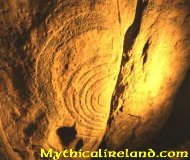
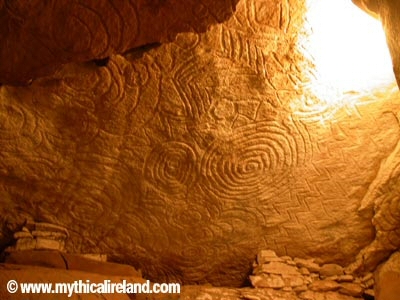
Equinox Stone - Loughcrew Cairn T
      Equinox Stone - Loughcrew Cairn T
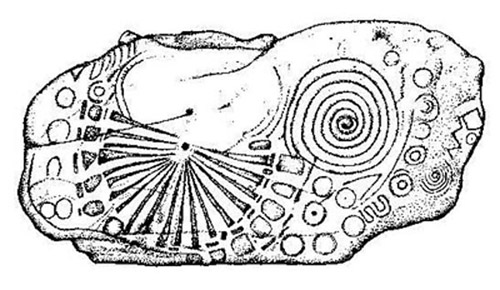
Cairn T or Hag's Cairn is of similar design to Newgrange. Traditionally described as a Passage Tomb, the wonderfully decorated backstone shows that the Cairn has a clear astronomical purpose.

A beam of light from the rising sun around the time of the March and September equinoxes is mapped on the backstone of the Cairn.

I was in the chamber on the 21st of September 2002 and was rewarded with the brilliant illumunation of the backstone.
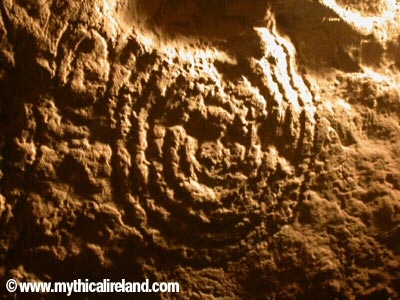
The interior of Cairn L, a freestanding limestone monolith or menhir is positioned inside the chamber (on the left of the image). Martin Brennan believes the six foot high monolith to be a marker for the Cross-quarter Days of November 8th and February 4th, when the sun illuminates the stone.

Click Here for a larger view.

Limestone monolith positioned inside Loughcrew Cairn L

http://www.knowth.eu/loughcrew.htm

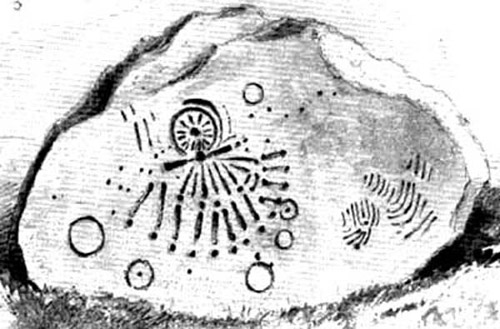
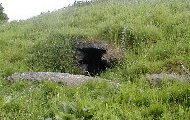
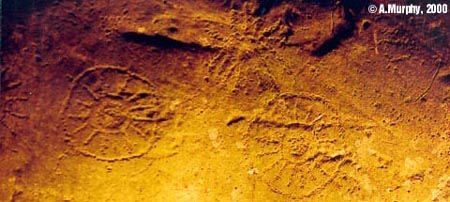
Next I would like to show three similar constructions in stone from 5000 years ago, found at Knowth or Loughcrew in Ireland (www.mysticalireland.com). All of these are accepted by the academic community to be true megalithic sundials:
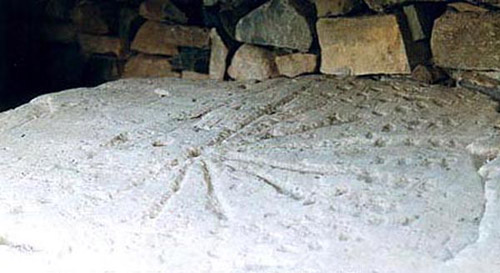
 

A link between the ancient people who built those megalithic sites, and the modern crop artists, has never seemed stronger.
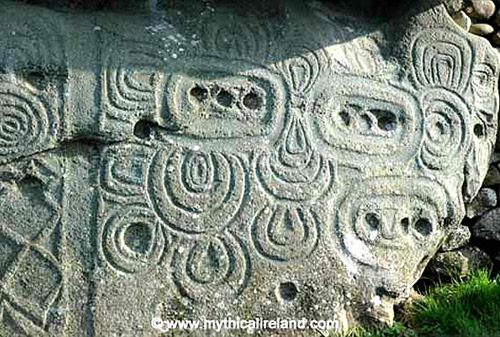
http://www.cropcircleconnector.com/anasazi/sundial2007.html


All of these pictures came from www.mythicalireland.com. While researching this essay, I even found to my surprise that "waves" similar to those shown at Oliver's Castle were seemingly carved at Newgrange into Kerbstone 52:


Knowth


Knowth from The Sacred Island by Martin Byrne.

Engraved Knowth Kerbstone K15, possibly a sundial or lunar calendar. Drawing by Martin Brennan superimposed using Photoshop by Martin Byrne.
Knowth Kerbstone K15, possibly a sundial or lunar calendar


Orthostat 47 from the back of the eastern chamber at Knowth Lunar Maps at Knowth - the carvings on orthostat 47 at the end of the chamber in the eastern passage have been identified by Philip J. Stooke as lunar maps. The right-hand section appears to be a map of the lunar maria. The remaining two sections of the carving are simpler but crudely similar to the first, sharing the overall arc shape of the maria surrounding the lunar central highlands as well as an isolated spot representing Mare Crisium.


Knowth from Mythical Ireland by Anthony Murphy.

Calendar stone - a kerbstone at Knowth which shows that the people who constructed the great mound were well aware of what we call the 'Metonic Cycle' of the moon.

Lunar Stone - a 5000-year-old stone device used to calculate the lengths of the lunar tropical month, synodic month, and the length of the year.
Orthostat 44 in the western passage at Knowth

http://www.knowth.com/


Dowth

Dowth the Fairy Mound of Darkness is about the same size as Newgrange and Knowth and was built in the same period over 5000 years ago. The mound was subjected to a very unprofessional excavation in 1847, two passage tombs were discovered but the mound was severely damaged in the process. The passages tombs are much less spectacular than Newgrange or Knowth with shorter passages and lower roofs. Both are on the western site of the mound, they are referred to as Dowth North and Dowth South. The Dowth North passage is 14 metres in length; the chamber is cruciform in shape with an annex off the right hand recess, the chamber roof is corbelled and is 3 metres high.

Dowth South - Passage Entrance The Dowth South passage is only 3.5 metres in length with a simple circular chamber and a single recess to the right; the original roof collapsed long ago and has been replaced by a concrete roof. Dowth South is aligned to the setting sun of the winter solstice; the setting sun illuminates the passage and chamber from about 2pm to 4pm on the days around the winter solstice.

http://www.knowth.com/dowth.htm

Kerbstone 51 star markings

Megalithic art at Dowth

http://www.mythicalireland.com/ancientsites/dowth/index.html


Newgrange


Newgrange Chamber

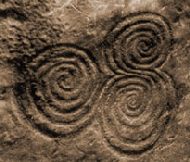
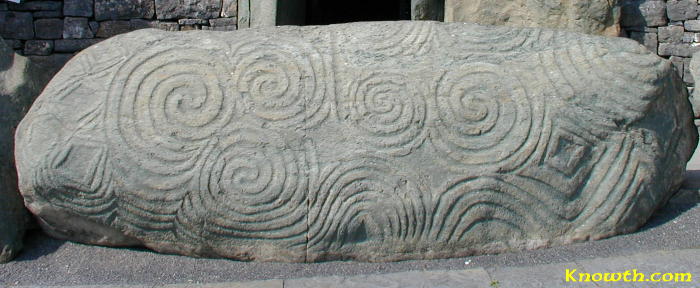
Images from inside the chamber at Newgrange including the tri-spiral design on orthostat C10 which is probably the most famous Irish Megalithic symbol. It is often referred to as a Celtic design, but it was carved at least 2500 years before the Celts reached Ireland. At 12 inches in diameter the tri-spiral design is quite small in size, less than one-third the size of the tri-spiral design on the entrance stone.

New Gragne Tri-Spiral

http://www.knowth.com/newgrange.htm


http://www.mythicalireland.com/ancientsites/newgrange/artgallery/artgallery.html


Stars, Galaxies, and the Universe (29:50)
Spring 2006

Welcome to the Stars, Galaxies, and The Universe class website. Please click on the Introduction button at left for a summary of the course.

http://astro.physics.uiowa.edu/sgu-spr06/  


http://www.boscobel.k12.wi.us/~schnrich/galaxies.htm


NASA Finds 'Big Baby' Galaxies in Newborn Universe
09.27.05
 
Two of NASA's Great Observatories, the Spitzer and Hubble Space Telescopes, have teamed up to "weigh" the stars in several distant galaxies. One of these galaxies, among the most distant ever seen, appears to be unusually massive and mature for its place in the young universe.

This came as a surprise to astronomers. The earliest galaxies in the universe are commonly thought to have been much smaller associations of stars that gradually merged to build large galaxies like our Milky Way.

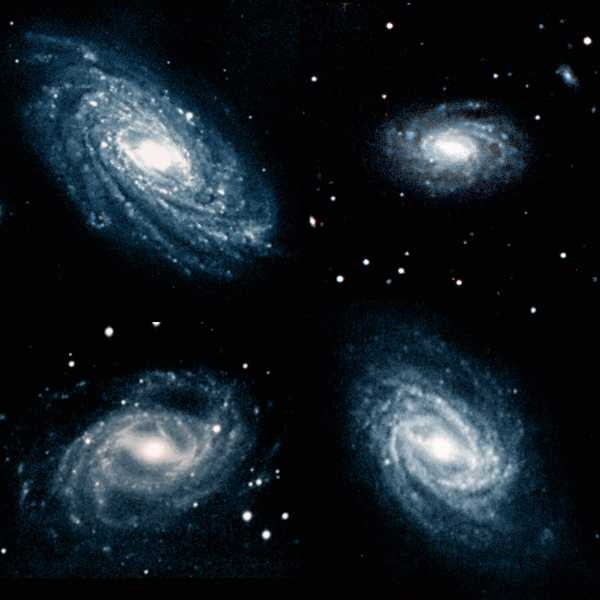
Spitzer and Hubble Space Telescopes image HUDF-JD2, one of the most distant galaxies ever seen. Top left, a combined visible and infrared view; top right, Hubble's visible ligh viwe; lower left, Hubble's infrared view; lower right, Spitzer's infrared view.

http://e-book-free.com/2008/10/23/galaxies-in-the-universe-an-introduction-linda-s-sparke-john-s-gallagher.html


Knowth's engraved stones

Another stone from Site 14.

http://www.carrowkeel.com/sites/boyne/knowth/knowth5.html


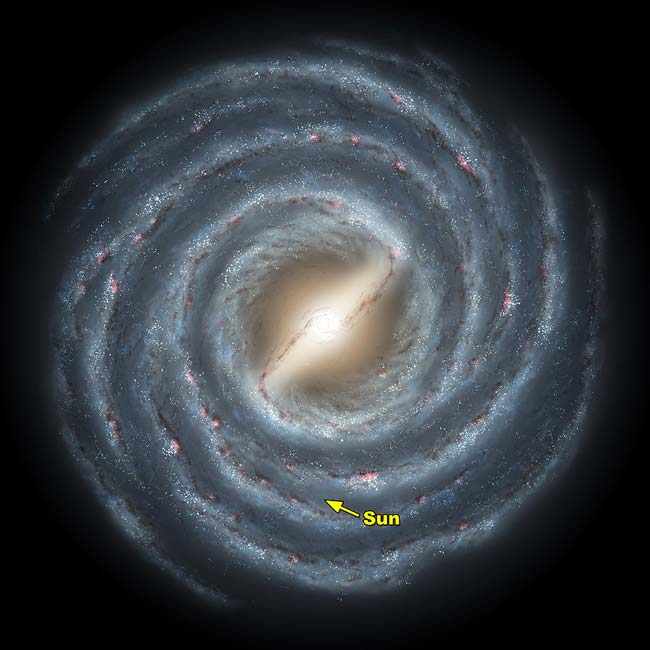
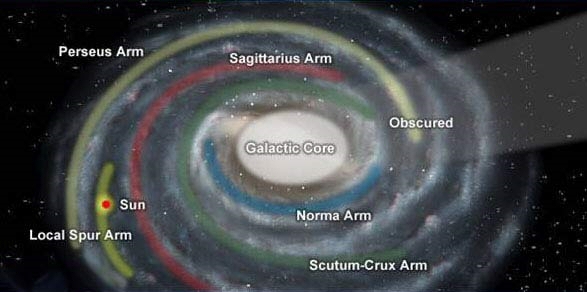
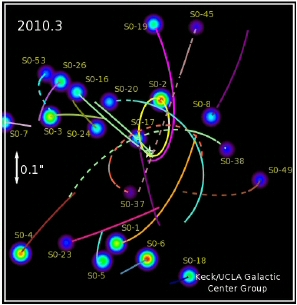
ow is another representation of the centre of our Galaxy

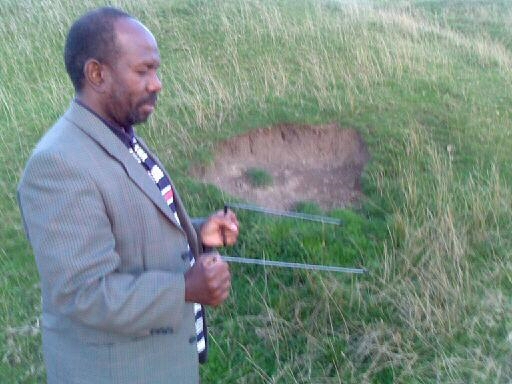
Dowsing at Tara

http://www.aroundireland.net/2006/09/dowsing_at_tara.html


Lismullin

Megalithic art discovered at Lismullin Souterrain

Best of-M3 Clonee to North of Kells
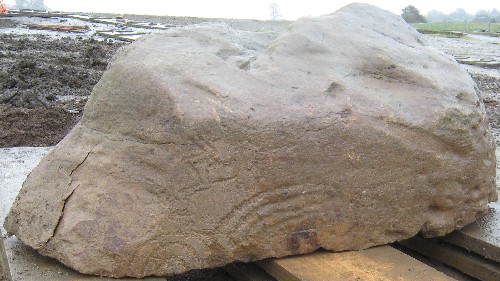
Capstone from Lismullin Souterrain with Megalithic Art (photo: Mary Deevy)

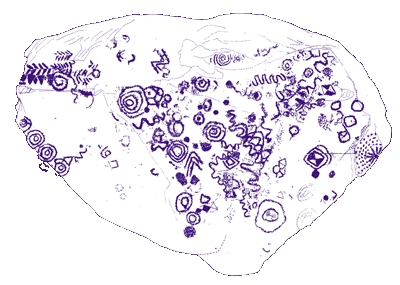
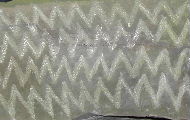
In November 2007, while lifting the capstone off the main chamber of a medieval   souterrain at Lismullin (M3 Clonee to North of Kells Motorway), archaeologists working for Archaeology Consultancy Services Ltd discovered decoration carved into the side of the stone. The art consists mainly of a double row of zigzags or chevrons, half a series of concentric circles and what appears to be a nest of arcs. Preliminary interpretation suggests that originally the stone was used as a kerbstone in a Neolithic passage tomb. It was split before incorporation into the souterrain and the decoration would not have been visible inside the chamber.

http://www.nra.ie/Archaeology/BestofNRADiscoveries/

what to say ...?

the M3 is being built over it


Fourknocks

Fourknocks Megalithic Passage Tomb

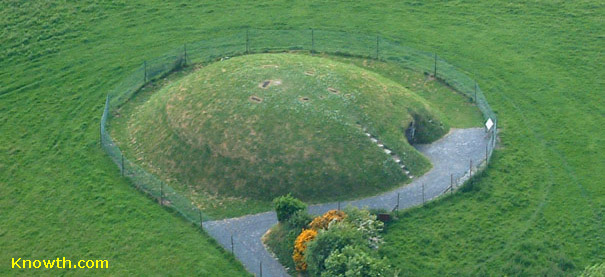
Fourknocks Aerial View
Fourknocks - Aerial View


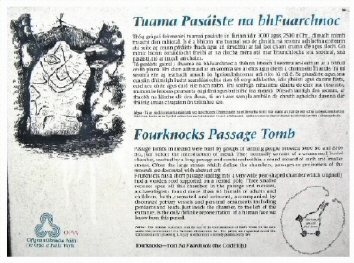
Fourknocks is a Passage Chamber Tomb built about 5000 years ago. It is located 10 miles southeast of Newgrange between Ardcath in County Meath and the Naul in County Dublin. The name Fourknocks may be from the Irish Fuair Cnocs meaning Cold Hills or maybe Four Cnocs is a reference to the Four Tombs (Four Hills). Only the main tomb pictured above has been excavated and is open to the public.

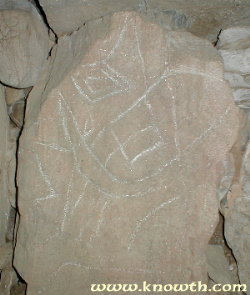
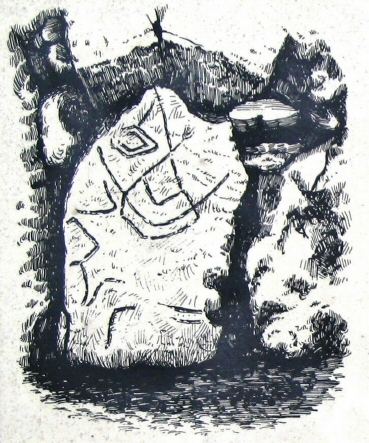
Fourknocks Face Stone Fourknocks has a short passage leading into a wide pear shaped chamber with three smaller offset chambers. The original roof was probably a wooden structure supported by a central pole. The current concrete roof was constructed in 1952 at the end of a 2 year excavation. Fragments of 65 burials were found in the tomb, both cremated and unburnt remains of adults and children. Decorated Pottery and Vessels and personal ornaments including pendants and beads were also found. All of the items found were moved to the National Museum.

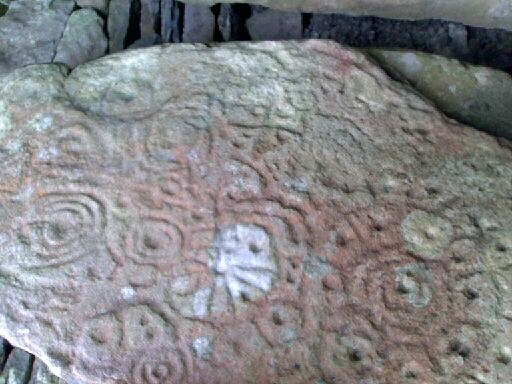
Just inside the main chamber to the left of the entrance is one of the few representations of a human face from the Neolithic Period in Ireland. The Face Stone is about 3 feet high and looks like a prehistoric smiley face.
The key for the entrance door to Fourknocks Passage Tomb can be got from Mr. Fintan White who lives over a mile from the Tomb. Directions are signposted from Fourknocks. A cash deposit must be given which is refundable on the safe return of the key. The key should be returned before 6pm.
 

http://www.knowth.eu/fourknocks.htm


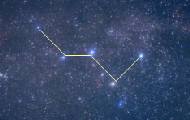
The constellation of Cassiopeia

Fourknocks

An interpretation
by Martin Dier

Fourknocks - Art

This article is based on a lecture given to the Meath archaeological and historical society by Martin Dire at the Fourknocks in June 2004. The lecture was based on outlining the less obvious reasons why structures like the Fourknocks were sited where they were. Martin argues that the placements of the prehistoric monuments are far from haphazard or random.

http://www.knowth.eu/fourknocks-mdier.htm   

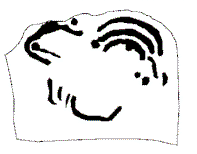
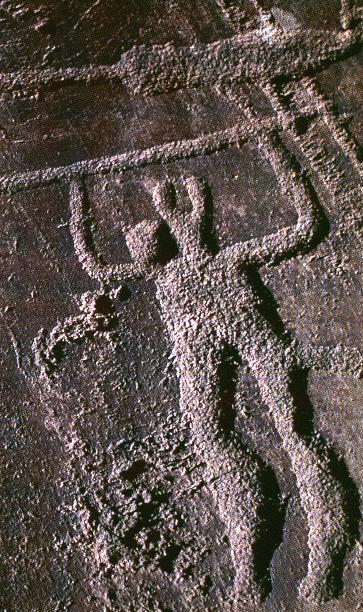
this rockcarving that looks like a hamster is supposed to be the only known representation of a human -
but perhaps it isnt  - but is showing the paths of celestial objects

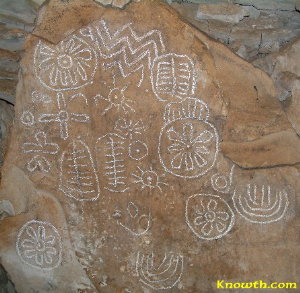
pic below is another representation of the centre of our Galaxy


http://www.astro.ucla.edu/~ghezgroup/gc/pictures/orbitsMovie.shtml


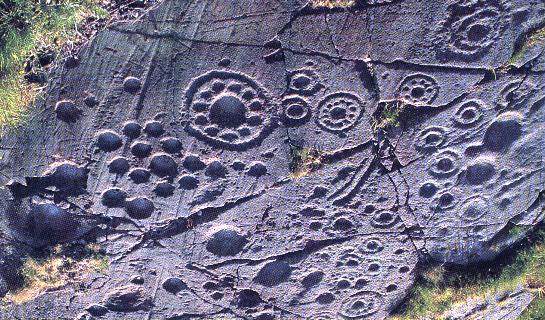
Rock art panel from Scotland
Rock art from Sweden
Rock art panel near Kilmartin, Argyll in Scotland.  Rare ringed rosette design also seen in Scotland and Ireland

http://www.accd.edu/sac/vat/arthistory/arts1303/Neolith1.htm