A Tarot of the Northern Constellations
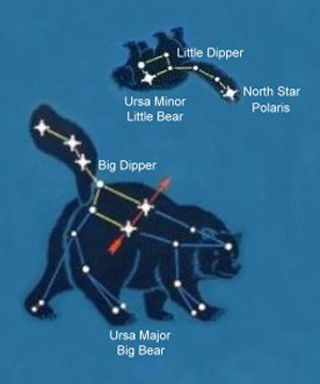
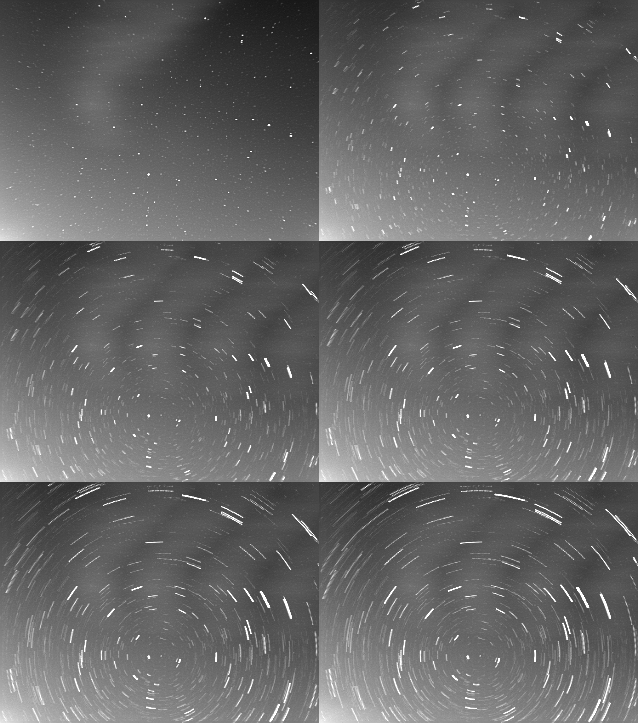
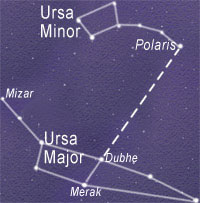
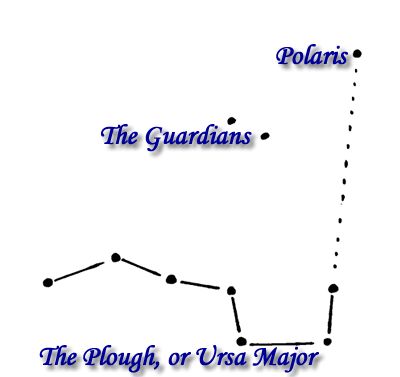
The Big Dipper is a polar 'constellation' -- one that is very close to the North Pole. If stars are close enough to the pole they never set below the horizon and we can see them all year long. Can anyone spot the Pole Star? How do you find it? That's right, the two stars at the front edge of the cup are pointer stars and point to the North Star, whose actual name is Polaris. Go up from the cup to find Polaris.

|
|

|
The Fool
is really not as insulting as it sounds. This card may also be called
The Excuse. It is represented by the number 0 in the Major Arcana deck.
|
||||||||
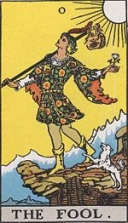 The Fool Tarot Card or The Jester Tarot Card

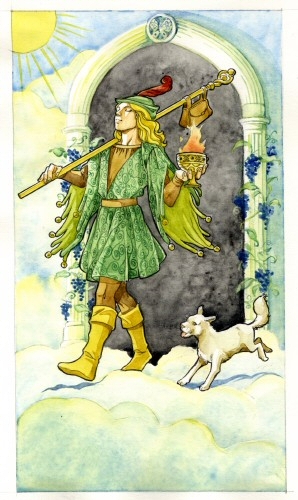


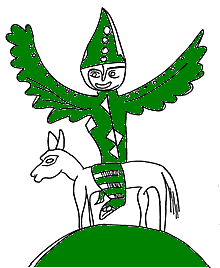



Arc to Acturus ....
So the Big Dipper points to the North Star -- it also points to other important stars -- you follow the arc of the Dipper's handle and "arc to Arcturus", then "spike to Spica" - two very important stars that we will get to in a minute. So the three stars of the handle are pointers as well.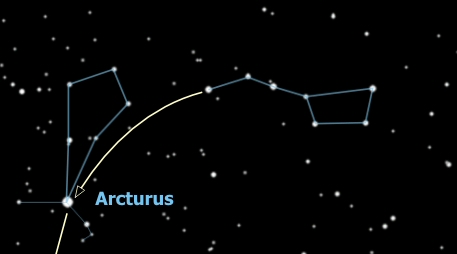
|
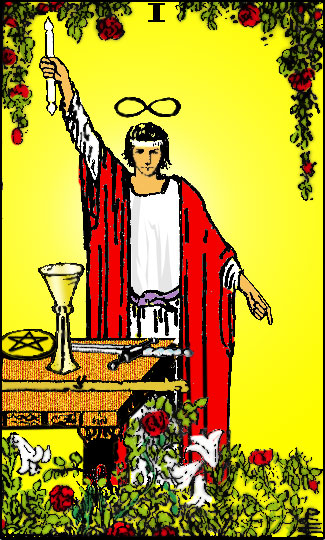
the Magician
|
Guardian of the Great Bear
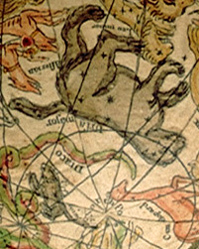
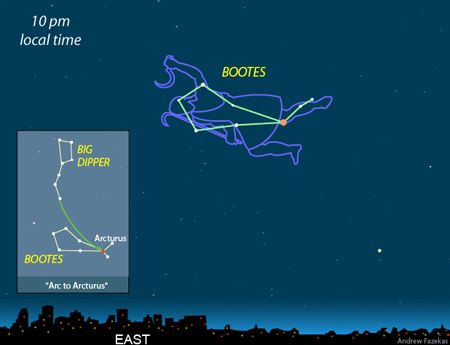 Riding high in the southeast evening skies, is the kite-shaped constellation Bootes, the Herdsman. It is a fairly easy stellar pattern to track down with just the naked-eye thanks to its bright orange-hued lead star, Arcturus. To find Bootes in the springtime night skies begin your hunt at the handle of the Big Dipper in the north. Extend its curve and sweep outward until reaching Arcturus, the brightest star of the season. Affectionately known as the protector of the bears, this ancient constellation is recognized by many cultures as a shepherd caring for the Ursa Major and Ursa Minor bears. While the Egyptians saw a god of agriculture who invented the plow, to the Romans he was a celestial hunter circling his prey around the North Star. First mention of Bootes is found in Homer's Odyssey, written nearly three millennia ago, where we find our hero sailing the seas by the stars of Bootes. |
|
Boötes, the Herdsman
The name Boötes comes from a Sumerian word that means "Man Who Drove the Great Cart." The "Great Cart" was the Big Dipper. Boötes trails the Big Dipper as it wheels around the North Star. |

and speed on to Spica -

|
The High Priestess
|


|
The Empress
|

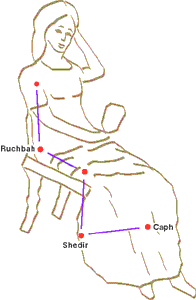
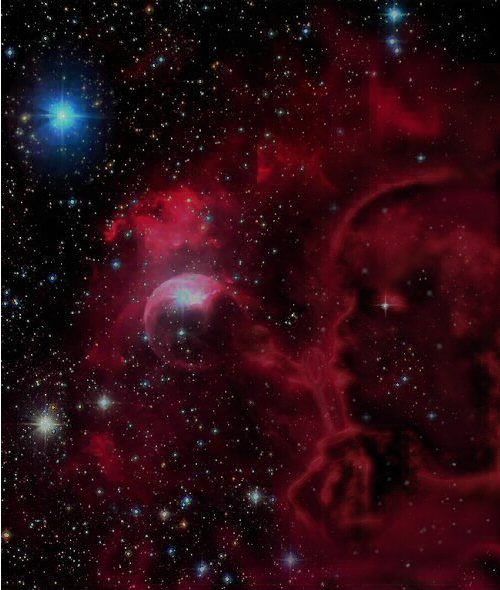 Bubble Nebula The Bubble Nebula Source NGC 7635 Planetary Nebula Constellation: Cassiopeia RA: 23h 20m 42s Dec: +61 11' 00 Planetary nebulae form when aging stars lose mass via stellar winds. The wind sweeps up the surrounding medium around the star into a shell, which can appear as a ring or other shapes around the central star due to the effects of perspective and viewing angle. |
|
the Emperor
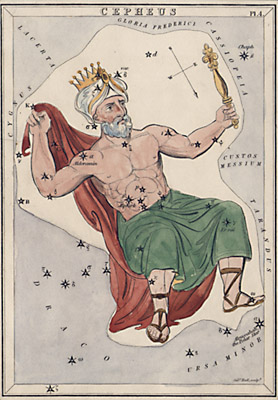
Cepheids A Cepheid variable (pron: 'se-f(e-)id or 'se-f(e-)id) or Cepheid is a member of a particular class of variable stars, notable for a fairly tight correlation between their period of variability and absolute luminosity. The namesake and prototype of these variables is the star Delta Cephei, discovered to be variable by John Goodricke in 1784. from Wikipedia HERE
|







|
the Heirophant
Draco Draco # 2.
Draco Overview
http://radicalcorner.com/uranometria_photos_main/uranometria_photos.htm
The star , Thuban , in Draco was once the Pole Star - around 2800 BC the picture below shows the path of the North Pole over the ages . The changes are due to " Precession "
|


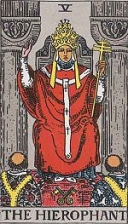 The Hierophant Tarot Card or The Pope Tarot Card, and in some decks, Jupiter is the number 5 card and can mean knowledge, respect, education, power, deception, maturity or experience.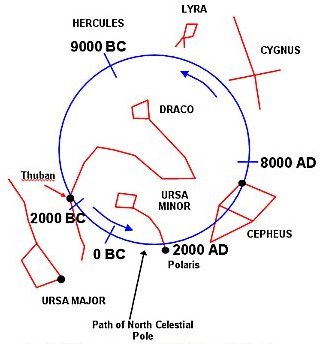
|
The Lovers
|
 The Lovers


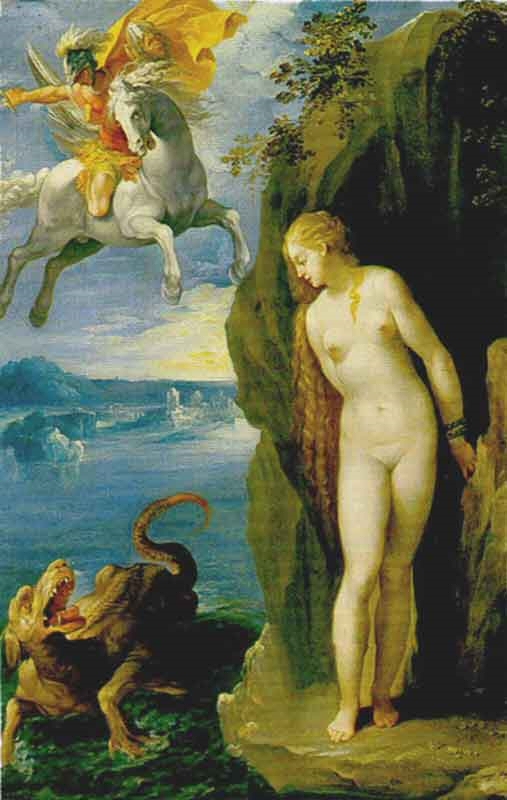
 |
 |
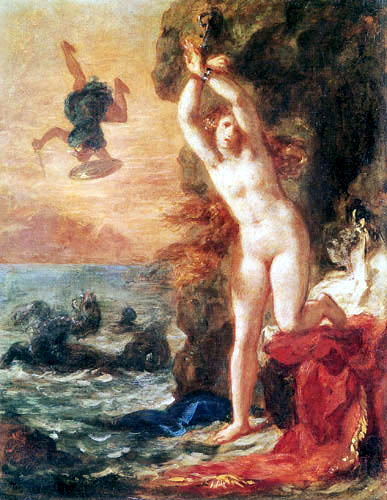
Eugene Delacroix - Perseus and Andromeda
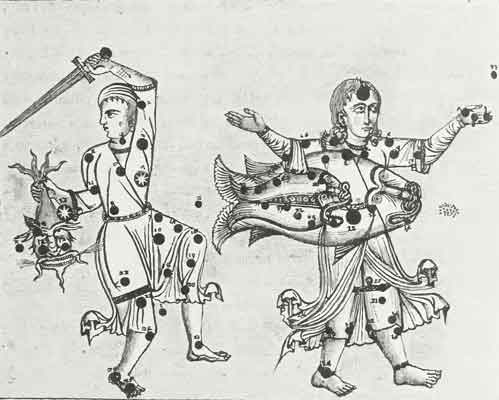


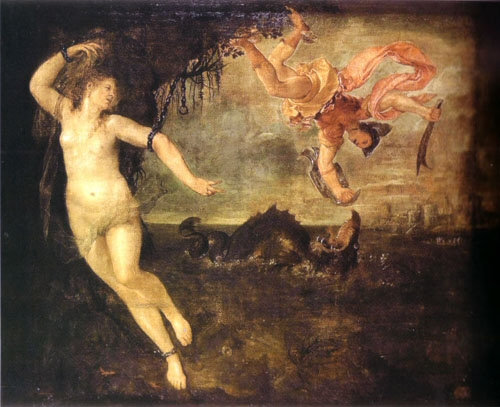
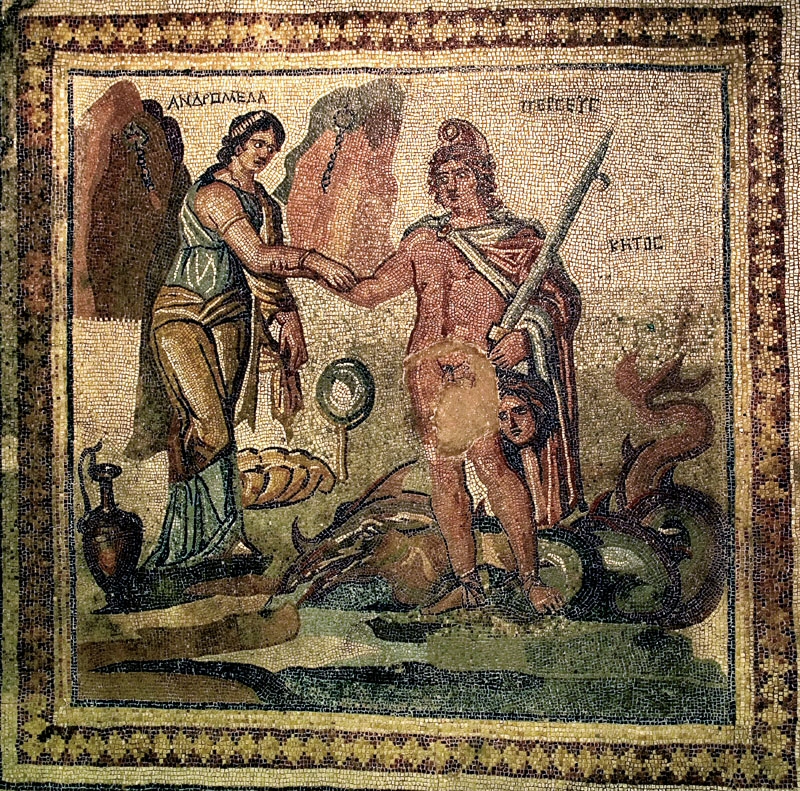
Perseus, the Hero
Perseus, the hero, arcs high overhead in fall and early winter. Many of
its stars are immersed in the faint glow of our galaxy, the Milky Way.
In fact, if you look at Perseus under dark skies, you may be able to
see three of the spiral arms that enfold the Milky Way.
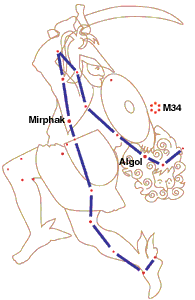
One of the brightest and most interesting stars in Perseus is Algol.
The name Algol means "demon star." Ancient skywatchers thought it was
cursed because its brightness changes. That's because Algol — which is
about 75 light-years from Earth — is the most famous "eclipsing binary"
star. Today, astronomers know that Algol is two separate stars. About
once every three days, the fainter member of the pair passes in front
of the brighter one, and Algol grows fainter.
A faint star cluster in Perseus, called M34 is visible with binoculars.
http://stardate.org/nightsky/constellations/perseus.html


the Lovers Reversed - by Christos Neofotistos
|
The Chariot
|


Justice
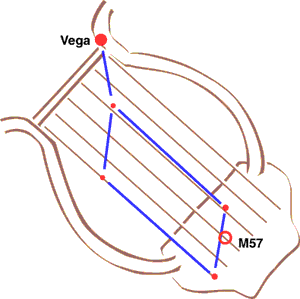
Lyra, the lyre and the star Vega
Lyra, the Harp
Justice
|


 The Justice Tarot Card
is the 11th card, or in some decks, the 8th. This card represents
justice, being clever, decision, intellect, responsibility or logic and
reason.
The Justice Tarot Card
is the 11th card, or in some decks, the 8th. This card represents
justice, being clever, decision, intellect, responsibility or logic and
reason.
|
|
|
Melody Hay - Blue Door, 2008 |

