Lycia Home

HERE

Lycis Cnidos

HERE

Eudoxus_Home

HERE

Algebra

HERE

constellations

HERE

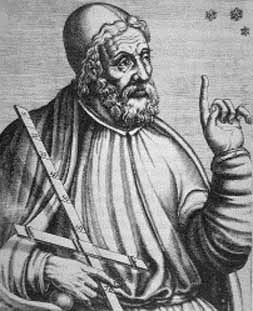
Eudoxus of Cnidus (410 or 408 BC ­ 355 or 347 BC) was a Greek astronomer, mathematician, physician, scholar and student of Plato. Since all his own works are lost, our knowledge of him is obtained from secondary sources, such as Aratus's poem on astronomy. Theodosius of Bithynia's Sphaerics may be based on a work of Eudoxus.

Eudoxus was the son of Aeschines of Cnidus, located in Asia Minor. Eudoxus first travelled to Tarentum to study with Archytas, from whom he learned mathematics. While in Italy, Eudoxus visited Sicily, where he studied medicine with Philiston.

Around 387 BC, at the age of 23, he traveled with the physician Theomedon to Athens to study with the followers of Socrates. He eventually became the pupil of Plato, with whom he studied for several months, but due to a disagreement they had a falling out. Eudoxus was quite poor and could only afford an apartment at the Piraeus. To attend Plato's lectures, he walked the seven miles each direction, each day. Due to his poverty, his friends raised funds sufficient to send him to Heliopolis, Egypt to pursue his study of astronomy and mathematics. He lived there 16 months. From Egypt, he then traveled north to Cyzicus, located on the south shore of the Sea of Marmara, and the Propontis. He traveled south to the court of Maussolus. During his travels he gathered many students of his own.

Around 368 BC, he returned to Athens with his students. Eudoxus eventually returned to his native Cnidus, where he served in the city assembly. While in Cnidus, he built an observatory and continued writing and lecturing on theology, astronomy and meteorology. He had one son, Aristagoras, and three daughters, Actis, Philtis and Delphis.

In mathematical astronomy his fame is due to the introduction of the astronomical globe, and his early contributions to understanding the movement of the planets.

His work on proportions shows tremendous insight into numbers; it allows rigorous treatment of continuous quantities and not just whole numbers or even rational numbers. When it was revived by Tartaglia and others in the 1500s, it became the basis for quantitative work in science for a century, until it was replaced by the algebraic methods of Descartes.

Eudoxus rigorously developed Antiphon's method of exhaustion, which was used in a masterly way by Archimedes. The work of Eudoxus and Archimedes as precursors of calculus was only exceeded in mathematical sophistication and rigour by Indian Mathematician Bhaskara and later by Newton.

Mathematics

Astronomy

In ancient Greece, astronomy was a branch of mathematics; astronomers sought to create geometrical models that could imitate the appearances of celestial motions. Identifying the astronomical work of Eudoxus as a separate category is therefore a modern convenience. Some of Eudoxus' astronomical texts whose names have survived include:

  • Disappearances of the Sun, possibly on eclipses
  • Oktaeteris, on an eight-year lunisolar cycle of the calendar
  • Phaenomena and Entropon, on spherical astronomy, probably based on observations made by Eudoxus in Egypt and Cnidus
  • On Speeds, on planetary motions

We are fairly well informed about the contents of Phaenomena, for Eudoxus' prose text was the basis for a poem of the same name by Aratus. Hipparchus quoted from the text of Eudoxus in his commentary on Aratus.

Wikipedia

http://www.crystalinks.com/eudoxus.html


Kampyle of Eudoxus

From Wikipedia,

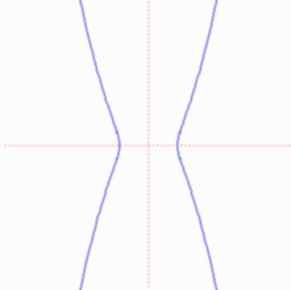
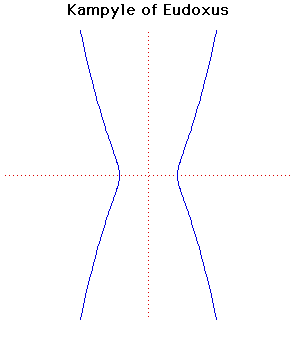
The Kampyle of Eudoxus (Greek: καμπύλη [γραμμή], meaning simply "curved [line], curve") is a curve, with a Cartesian equation of

x^4=x^2+y^2\,,

or, in polar coordinates,

r= \sec^2\theta\,.

This quartic curve was studied by the Greek astronomer and mathematician Eudoxus of Cnidus (c. 408 BC – c.347 BC) in relation to the classical problem of doubling the cube.

[edit] See also

[edit] External links

http://en.wikipedia.org/wiki/Kampyle_of_Eudoxus


Graph of Kampyle of Eudoxus

Graph of Kampyle of Eudoxus


Cube Duplication

Cube duplication, also called the Delian problem, is one of the geometric problems of antiquity which asks, given the length of an edge of a cube, that a second cube be constructed having double the volume of the first. The only tools allowed for the construction are the classic (unmarked) straightedge and compass.

The problem appears in a Greek legend which tells how the Athenians, suffering under a plague, sought guidance from the Oracle at Delos as to how the gods could be appeased and the plague ended. The Oracle advised doubling the size of the altar to the god Apollo. The Athenians therefore built a new alter twice as big as the original in each direction and, like the original, cubical in shape (Wells, 1986, p. 33). However, as the Oracle (notorious for ambiguity and double-speaking in his prophecies) had advised doubling the size (i.e., volume), not linear dimension (i.e., scale), the new altar was actually eight times as big as the old one. As a result, the gods remained unappeased and the plague continued to spread unabated. The reasons for the dissatisfaction of the gods under these circumstances is not entirely clear, especially since eight times the volume of original altar was a factor of four greater than actually requesting. It can therefore only be assumed that Greek gods were unusually ticklish on the subject of "altar"-ations being performed to their exact specifications.

Under these restrictions, the problem cannot be solved because the Delian constant 2^(1/3) (the required ratioof sides of the original cube and that to be constructed) is not a Euclidean number. However, the impossibility of the construction required nearly 2000 years, with the first proof constructed by Descartes in 1637. The problem can be solved, however, using a Neusis construction.

from Mathworld  HERE


Cartesian Equation

An equation representing a locus L in the n-dimensional Euclidean space. It has the form

 L:f(x_1,...,x_n)=0,
(1)

where the left-hand side is some expression of the Cartesian coordinates x_1, ..., x_n. The n-tuples of numbers (x_1...,x_n)fulfilling the equation are the coordinates of the points of L.

from Mathworld  HERE

Kampyle of Eudoxus

Cartesian equation:
a2x4 = b4(x2 + y2)
Polar equation:
r = b2/(a cos2(theta))


Click below to see one of the Associated curves.

Definitions of the Associated curves

Evolute

Involute 1

Involute 2

Inverse curve wrt origin

Inverse wrt another circle

Pedal curve wrt origin

Pedal wrt another point

Negative pedal curve wrt origin

Negative pedal wrt another point

Caustic wrt horizontal rays

Caustic curve wrt another point

http://www-groups.dcs.st-and.ac.uk/~history/Curves/Kampyle.html

http://www-groups.dcs.st-and.ac.uk/~history/Java/Kampyle.html


Implicit Algebraic Surfaces

KampyleOfEudoxus

Equation: y^2+z^2-x^4+0.04*x^2

HERE

wikimedia curves - HERE

Plane Curve Gallery

Ellipse and evolute

HERE


[Graphics:Images/index_gr_139.gif]

Kampyle of Eudoxus Back

Cartesian[Graphics:Images/index_gr_140.gif]
Polar[Graphics:Images/index_gr_141.gif]
[Graphics:Images/index_gr_142.gif]

[Graphics:Images/index_gr_143.gif]

[Graphics:Images/index_gr_144.gif]
http://curvebank.calstatela.edu/famouscurves/famous.htm  


 in Povray

The Kampyle of Eudoxus" is like two infinite planes with a dimple at the centre.

The parameters are:

  1. Field Strength
  2. Dimple: When zero, the two dimples punch right through and meet at the centre. Non-zero values give less dimpling.
  3. Closeness: Higher values make the two planes become closer.

  function { f_kampyle_of_eudoxus(x,y,z,1,0,1)}


The 2d curve that generates the above surface can be extruded in the Z direction or rotated about various axes by using the SOR parameters. In this case I've created the same shape as in the 3d version.

The parameters are:

  1. Field Strength
  2. Dimple: When zero, the two dimples punch right through and meet at the centre. Non-zero values give less dimpling.
  3. Closeness: Higher values make the two planes become closer.
  4. SOR switch
  5. SOR offset
  6. SOR angle

  function { - f_kampyle_of_eudoxus_2d
     (x, y, z, 1, 0, 1, 1, 0, 90)}

http://www.econym.demon.co.uk/isotut/printable.htm

http://www.econym.demon.co.uk/isotut/


Kampyle of Eudoxus

From Wikipedia,

The Kampyle of Eudoxus (Greek: καμπύλη [γραμμή], meaning simply "curved [line], curve") is a curve, with a Cartesian equation of

x^4=x^2+y^2\,,

or, in polar coordinates,

r= \sec^2\theta\,.

This quartic curve was studied by the Greek astronomer and mathematician Eudoxus of Cnidus (c. 408 BC – c.347 BC) in relation to the classical problem of doubling the cube.

[edit] See also

[edit] External links

http://en.wikipedia.org/wiki/Kampyle_of_Eudoxus


Graph of Kampyle of Eudoxus

Graph of Kampyle of Eudoxus


Cube Duplication

Cube duplication, also called the Delian problem, is one of the geometric problems of antiquity which asks, given the length of an edge of a cube, that a second cube be constructed having double the volume of the first. The only tools allowed for the construction are the classic (unmarked) straightedge and compass.

The problem appears in a Greek legend which tells how the Athenians, suffering under a plague, sought guidance from the Oracle at Delos as to how the gods could be appeased and the plague ended. The Oracle advised doubling the size of the altar to the god Apollo. The Athenians therefore built a new alter twice as big as the original in each direction and, like the original, cubical in shape (Wells, 1986, p. 33). However, as the Oracle (notorious for ambiguity and double-speaking in his prophecies) had advised doubling the size (i.e., volume), not linear dimension (i.e., scale), the new altar was actually eight times as big as the old one. As a result, the gods remained unappeased and the plague continued to spread unabated. The reasons for the dissatisfaction of the gods under these circumstances is not entirely clear, especially since eight times the volume of original altar was a factor of four greater than actually requesting. It can therefore only be assumed that Greek gods were unusually ticklish on the subject of "altar"-ations being performed to their exact specifications.

Under these restrictions, the problem cannot be solved because the Delian constant 2^(1/3) (the required ratioof sides of the original cube and that to be constructed) is not a Euclidean number. However, the impossibility of the construction required nearly 2000 years, with the first proof constructed by Descartes in 1637. The problem can be solved, however, using a Neusis construction.

from Mathworld  HERE


Cartesian Equation

An equation representing a locus L in the n-dimensional Euclidean space. It has the form

 L:f(x_1,...,x_n)=0,
(1)

where the left-hand side is some expression of the Cartesian coordinates x_1, ..., x_n. The n-tuples of numbers (x_1...,x_n)fulfilling the equation are the coordinates of the points of L.

from Mathworld  HERE


Kampyle of Eudoxus

Cartesian equation:
a2x4 = b4(x2 + y2)
Polar equation:
r = b2/(a cos2(theta))


Click below to see one of the Associated curves.

Definitions of the Associated curves

Evolute

Involute 1

Involute 2

Inverse curve wrt origin

Inverse wrt another circle

Pedal curve wrt origin

Pedal wrt another point

Negative pedal curve wrt origin

Negative pedal wrt another point

Caustic wrt horizontal rays

Caustic curve wrt another point

http://www-groups.dcs.st-and.ac.uk/~history/Curves/Kampyle.html

http://www-groups.dcs.st-and.ac.uk/~history/Java/Kampyle.html


Implicit Algebraic Surfaces

KampyleOfEudoxus

Equation: y^2+z^2-x^4+0.04*x^2

HERE

wikimedia curves - HERE

Plane Curve Gallery

Ellipse and evolute

HERE


[Graphics:Images/index_gr_139.gif]

Kampyle of Eudoxus Back

Cartesian[Graphics:Images/index_gr_140.gif]
Polar[Graphics:Images/index_gr_141.gif]
[Graphics:Images/index_gr_142.gif]

[Graphics:Images/index_gr_143.gif]

[Graphics:Images/index_gr_144.gif]
http://curvebank.calstatela.edu/famouscurves/famous.htm  


img6.jp


 in Povray

The Kampyle of Eudoxus" is like two infinite planes with a dimple at the centre.

The parameters are:

  1. Field Strength
  2. Dimple: When zero, the two dimples punch right through and meet at the centre. Non-zero values give less dimpling.
  3. Closeness: Higher values make the two planes become closer.

  function { f_kampyle_of_eudoxus(x,y,z,1,0,1)}


The 2d curve that generates the above surface can be extruded in the Z direction or rotated about various axes by using the SOR parameters. In this case I've created the same shape as in the 3d version.

The parameters are:

  1. Field Strength
  2. Dimple: When zero, the two dimples punch right through and meet at the centre. Non-zero values give less dimpling.
  3. Closeness: Higher values make the two planes become closer.
  4. SOR switch
  5. SOR offset
  6. SOR angle

  function { - f_kampyle_of_eudoxus_2d
     (x, y, z, 1, 0, 1, 1, 0, 90)}

http://www.econym.demon.co.uk/isotut/printable.htm

http://www.econym.demon.co.uk/isotut/


Eudoxus of Cnidus (c.408 - c.355 BC) was one of the greatest Greek mathematicians. He was also an astronomer, philosopher and legislator.

His main contributions to mathematics were:

  • the theory of proportion, which resolved the crisis in Greek mathematics caused by the discovery of irrational numbers;
  • the method of exhaustion, which was a precursor (by 2000 years) of the integral calculus.

He may also have been responsible for the development of the axiomatic method, the foundation of modern mathematics.

His work in astronomy has stood the test of time less well. He developed a model of the universe which sought to explain the motions of the sun, the moon and the planets by fixing them to a system of 27 (or according to some authorities, 55) concentric spheres. These rotated on assorted axes at various speeds with the earth at the centre. Even with all this ingenuity he was unable to explain the motions of Venus and Mars nor the variation in brightness of the moon. His scheme was a magnificent attempt to explain observed phenomena, but wrong.

More long lasting in its influence was 'the sphere of Eudoxus'. This was an engraved celestial globe which showed the constellations together with their names. Eudoxus did not invent these, but carried them over from an earlier civilisation, most probably the Babylonians of c. 2500 BC. These names have remained in use to this day and are also the names we use as the signs of the Zodiac.

Further information about Eudoxus can be found in his mathematical biography.

Eudoxus (Eudoxos) is Greek for "of good repute".

Cnidus, latitude 36º40'N, longitude 27º20'E, was a city on the Western tip of the Resadiye peninsula in what is now Turkey. It is close to the Greek islands of Cos and Rhodes and the city of Halicarnassus, where King Mausolus's tomb, the Mausoleum, was one of the seven wonders of the ancient world.

http://www.eudoxus.com/eudoxus.html


Cartesian coordinate system

From Wikipedia,

In mathematics, the Cartesian coordinate system (also called rectangular coordinate system) is used to determine each point uniquely in a plane through two numbers, usually called the x-coordinate or abscissa and the y-coordinate or ordinate of the point. To define the coordinates, two perpendicular directed lines (the x-axis, and the y-axis), are specified, as well as the unit length, which is marked off on the two axes (see Figure 1). Cartesian coordinate systems are also used in space (where three coordinates are used) and in higher dimensions.

Using the Cartesian coordinate system, geometric shapes (such as curves) can be described by algebraic equations, namely equations satisfied by the coordinates of the points lying on the shape. For example, the circle of radius 2 may be described by the equation x2 + y2 = 4 (see Figure 2).

Contents

[hide]

[edit] History

Cartesian means relating to the French mathematician and philosopher René Descartes (Latin: Cartesius), who, among other things, worked to merge algebra and Euclidean geometry. This work was influential in the development of analytic geometry, calculus, and cartography.


Fig. 1: Illustration of the Cartesian coordinate system.  Four points are marked: (2,3) in green, (−3,1) in red, (−1.5,−2.5) in blue and (0,0), the origin, in purple.

Fig. 1: Illustration of the Cartesian coordinate system. Four points are marked: (2,3) in green, (−3,1) in red, (−1.5,−2.5) in blue and (0,0), the origin, in purple.

Fig. 2 - Cartesian coordinate system with the circle of radius 2 centered at the origin marked in red.  The equation of the circle is x2 + y2 = 4.

Fig. 2 - Cartesian coordinate system with the circle of radius 2 centered at the origin marked in red. The equation of the circle is x2 + y2 = 4.


misc


What Does a 4-Dimensional Sphere Look Like?

There is a very real geometric object, realizable within the relativistic geometry of our universe, which has the properties of a sphere in four dimensions (a “4-hypersphere”); what does it look like?(1)

Note (to professionals in relevant fields): the text below presents no new or unknown idea in physics or mathematics. The reason for writing it is that the author has struggled to learn the answers to questions such as this one for years, finding no explicit answer in

http://www.foundalis.com/phy/4Dsphere.htm


Famous Curves Index

Click on the name of a curve below to see its history and some of its associated curves.
Astroid
Bicorn
Cardioid
Cartesian Oval
Cassinian Ovals
Catenary
Cayley's Sextic
Circle
Cissoid of Diocles
Cochleoid
Conchoid
Conchoid of de Sluze
Cycloid
Devil's Curve
Double Folium
Dürer's Shell Curves
Eight Curve
Ellipse
Epicycloid
Epitrochoid
Equiangular Spiral
Fermat's Spiral
Folium
Folium of Descartes
Freeth's Nephroid
Frequency Curve
Hyperbola
Hyperbolic Spiral
Hypocycloid
Hypotrochoid
Involute of a Circle
Kampyle of Eudoxus
Kappa Curve
Lamé Curves
Lemniscate of Bernoulli
Limacon of Pascal
Lissajous Curves
Lituus
Neile's Parabola
Nephroid
Newton's Parabolas
Parabola
Pearls of de Sluze
Pear-shaped Quartic
Plateau Curves
Pursuit Curve
Quadratrix of Hippias
Rhodonea Curves
Right Strophoid
Serpentine
Sinusoidal Spirals
Spiral of Archimedes
Spiric Sections
Straight Line
Talbot's Curve
Tractrix
Tricuspoid
Trident of Newton
Trifolium
Trisectrix of Maclaurin
Tschirnhaus' Cubic
Watt's Curve
Witch of Agnesi

http://www-groups.dcs.st-and.ac.uk/~history/Curves/Curves.html