|
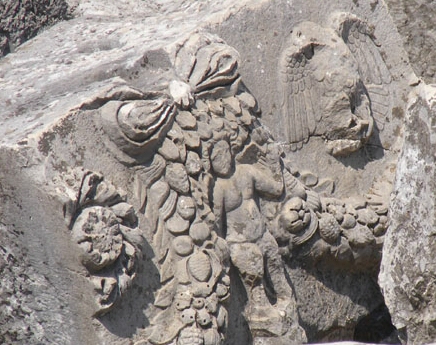
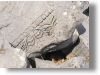
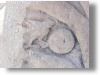
Tlos - stone carving in the theatre |
|
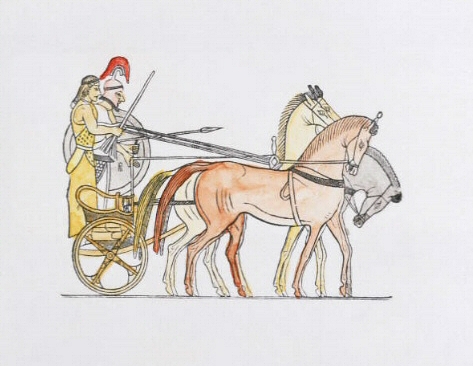
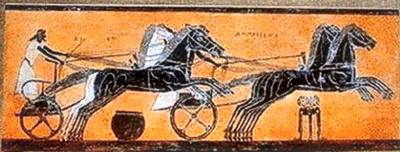
more about chariot racibg - HERE |
Tlos |
|
|
Tlos is known to have been one of the most important religious centers of the Lycian region in Antalya province of Turkey. It is known as the city where mythological hero Bellerophon and his winged flying horse Pegasus lived. Determined as the oldest city of Lycian Region by the archaeological excavations, Tlos dates back to the time before 2000 B.C. The graveyard on the natural rocks of the city acropolis was filled with most elaborate house-type tombs Of Lycia. It is known that the king-type tomb in the necropolis is dedicated to Bellerophon. As one of the six principal cities of Lycia (and one of the most powerful), Tlos once bore the title under the Roman empire of 'the very brilliant metropolis of the Lycian nation'. It is one of the oldest and largest settlements of Lycia (known as 'Tlawa' in Lycian inscriptions) and was eventually inhabited by Ottoman Turks, one of the few Lycian cities to continue it existence through the 19th century. There is evidence that Tlos was a member of the Lycian Federation from the 2nd century BC. Two wealthy philanthropists, one of which was Opramoas of Rhodiapolis, were responsible for much of the building in the 2nd century AD. Inscriptions tell us that the citizens were divided into demes, the names of three of them are known: Bellerophon, Iobates and Sarpedon, famous Lycian legendary heroes. A Jewish community is also known to have existed with its own magistrates. Tlos was re-discovered by Charles Fellows in 1838 and he was followed by the explorer Spratt, who thought that "a grander site for a great city could scarcely have been selected in all Lycia" - great praise indeed for a land abounding in grand scenery. |
|
|
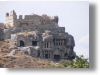
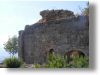
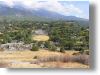
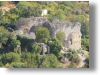
Tlos lies on the east side of the Xanthos valley, and is dominated by its acropolis. This rocky outcrop slopes up from a plateau with a charming village, but ends on the west, north and northeast in almost perpendicular cliffs. On its slope are several Lycian sarcophagi and many house and temple-type rock-cut tombs cut into the face of the hill. The influence of many cultures upon Tlos has resulted in an interesting collage of structures. It is a romantic place with lush nature and many of the buildings are vine-covered (especially the large bath), it would have been the perfect location for any romantic painter. http://en.wikipedia.org/wiki/Tlos |
|
|
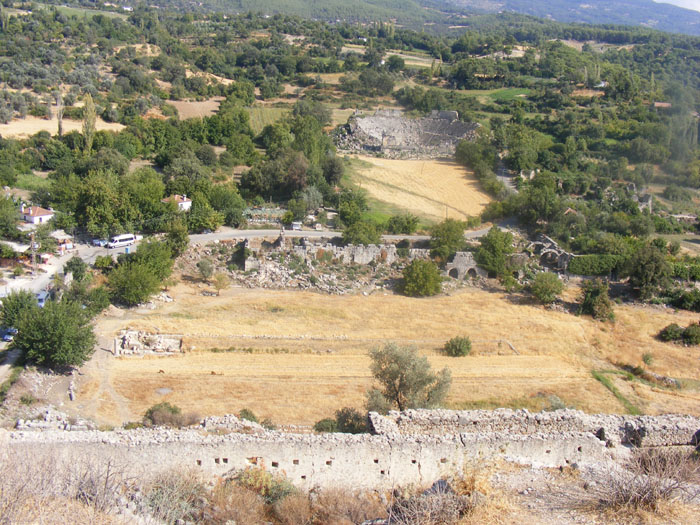
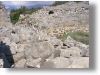
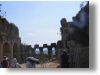
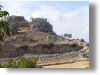
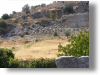
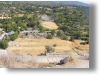
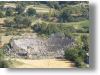
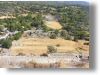
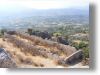
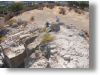
the stadium (foreground) , theatre (background ) and Roman baths ( right) - seen from the castle
|
|
|
|||||||||||||||||||||||||||||||||||||||||||||||||||||||||||||||||||||||||||||||||||||||||||||














|
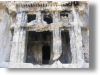
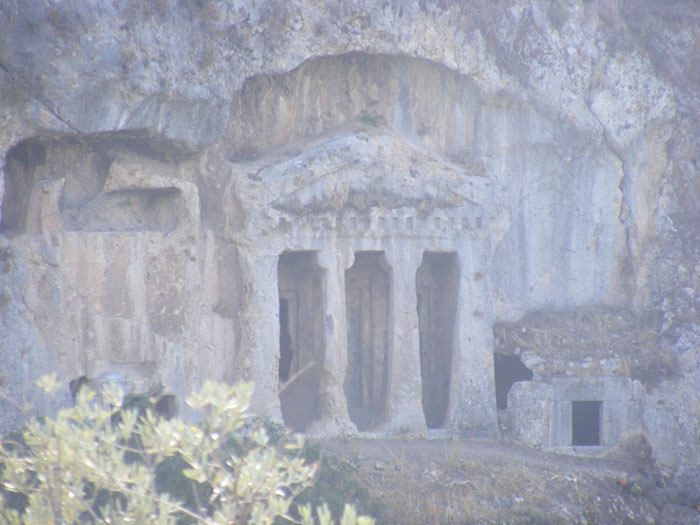
The tomb of Bellerophon |
|
In Grecian times, Bellerophon (the
brave son of the Korintos hero Flaukos) spies a flying horse. This
is Pegasus, the divine horse born of the blood of Medusa.
Bellerophon yearns to possess Pegasus but finds the wild creature
impossible to capture. With the aid of the city's soothsayer,
Bellerophon begs the goddess Athena to help him capture Pegasus. Athena
gives Bellerophon a golden bridle and with this he tames the winged
horse and the two become unseparable. However, Bellerophon
accidentally kills his brother in a hunting accident and is forced to
leave his country. He arrives in Tirynthe where Anteia, the queen (and
daughter of the Lycian king Iobates) falls in love with the young,
handsome Bellerophon. However, Bellerophon refuses her advances
and the angered Anteia tells her husband the king that Bellerophon has
tried to take advantage of her. Furious, but not wanting to be
subject to the wrath of the gods by killing his guest, the king instead
sends Bellerophon to his father-in-law, the Lycian king Iobates, with a
sealed letter asking him to behead Bellerophon. The Lycian king
welcomes Bellerophon on the banks of the Xanthos River and orders a nine
day feast in his honor. On the morning of the tenth day,
Bellerophon hands the letter to King Iobates. Upon reading the
letter the Lycian king sympathizes with his son-in-law but cannot
justify killing a guest. Instead, he
http://www.lycianturkey.com/legendary_heroes.htm |
 Another
legendary founder in Lycian and Greek mythology is Bellerophon, honoured at the
Lycian city of Tlos where his body was supposedly laid to rest . A tomb relief
of Bellerophon on Pegasus dating c.350-320 BC can be seen there and it is
assumed that there was a cult center at Tlos. Evidence of he Bellerophon
myth is seen elsewhere in the city and most likely the first rulers of Tlos
claimed that they descended from this mythical hero. Bellerophon may have
originally been a Greek hero and only later linked with Lycia by Greek
mythographers, due to the eternally burning fire emitting from the mountainside
at Olympos - said to be the Chimerea (a fearsome fire-breathing monster, also
spelled Chimaera) slain by Bellerophon fallen into the earth. If this is the
case, then Bellerophon was quickly adopted by the Lycians. He is seen in relief
at Tlos slaying the chimerea while mounted upon Pegasus, as well as on the
Limyra Heroon and the Trysa Heroon. Bellerophon is also seen often elsewhere on
reliefs from the end of the 5th century BC and later and Pegasus
appears frequently on Lycian coins.
Another
legendary founder in Lycian and Greek mythology is Bellerophon, honoured at the
Lycian city of Tlos where his body was supposedly laid to rest . A tomb relief
of Bellerophon on Pegasus dating c.350-320 BC can be seen there and it is
assumed that there was a cult center at Tlos. Evidence of he Bellerophon
myth is seen elsewhere in the city and most likely the first rulers of Tlos
claimed that they descended from this mythical hero. Bellerophon may have
originally been a Greek hero and only later linked with Lycia by Greek
mythographers, due to the eternally burning fire emitting from the mountainside
at Olympos - said to be the Chimerea (a fearsome fire-breathing monster, also
spelled Chimaera) slain by Bellerophon fallen into the earth. If this is the
case, then Bellerophon was quickly adopted by the Lycians. He is seen in relief
at Tlos slaying the chimerea while mounted upon Pegasus, as well as on the
Limyra Heroon and the Trysa Heroon. Bellerophon is also seen often elsewhere on
reliefs from the end of the 5th century BC and later and Pegasus
appears frequently on Lycian coins.  sets Bellerophon on the challenge of killing the terrible Chimera which
has been terrorizing Lycia and laying waste to the countryside.
With the body of a goat, tail of a snake and the head of a lion, the
Chimera breathes fire and reduces everything in its path to ashes. So
Bellerophon mounts Pegasus and the two of them kill the Chimera together
- they fly up and attacking from above Bellerophon thrusts his
iron-tipped lead spear into the monster's mouth, filling it with melted
iron and lead. King Iobates is so impressed, believing Bellerophon
to be the son of gods, that he gives his second daughter Fione to
Bellerophon in marriage and declares him to be the successor to his
throne. Unfortunately, Bellerophon is so proud that he declares
that he should have a place on Mount Olympus amongst the gods.
Annoyed by this impudence, Zeus causes a forest fly to bite Pegasus
while Bellerophon is riding him through the sky. Pegasus bucks and
Bellerophon is sent crashing to his death on the rocks below while
Pegasus soars up into the sky forming the constellation known by his
name.
sets Bellerophon on the challenge of killing the terrible Chimera which
has been terrorizing Lycia and laying waste to the countryside.
With the body of a goat, tail of a snake and the head of a lion, the
Chimera breathes fire and reduces everything in its path to ashes. So
Bellerophon mounts Pegasus and the two of them kill the Chimera together
- they fly up and attacking from above Bellerophon thrusts his
iron-tipped lead spear into the monster's mouth, filling it with melted
iron and lead. King Iobates is so impressed, believing Bellerophon
to be the son of gods, that he gives his second daughter Fione to
Bellerophon in marriage and declares him to be the successor to his
throne. Unfortunately, Bellerophon is so proud that he declares
that he should have a place on Mount Olympus amongst the gods.
Annoyed by this impudence, Zeus causes a forest fly to bite Pegasus
while Bellerophon is riding him through the sky. Pegasus bucks and
Bellerophon is sent crashing to his death on the rocks below while
Pegasus soars up into the sky forming the constellation known by his
name.